The Rise of Financial Nihilism: The End Times Are Here
Financial nihilism is not a moral failure. It is what people do when an empire stops paying out for ordinary effort, and history keeps taking the same reading.

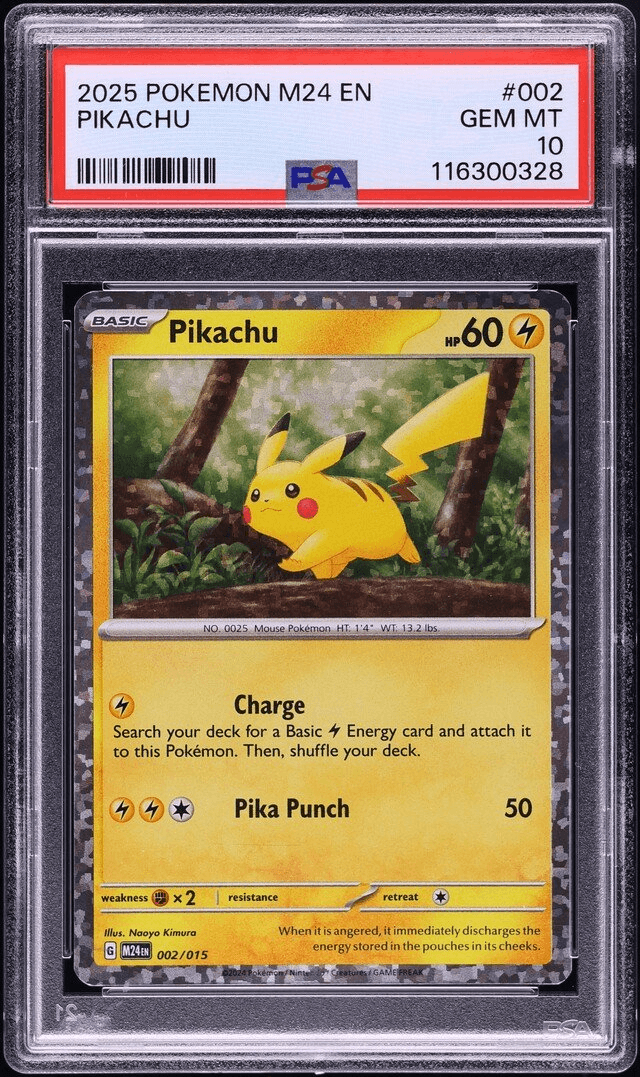
In December 2025, a Pikachu card given away free with McDonald's Happy Meals was sent for professional grading 58,000 times in a single month. Grown adults queued to pay a grading fee on a promotional freebie, hoping a perfect score would turn a toy into an asset, and this was not an anomaly. That year 26.6 million trading cards were graded, the most ever recorded.
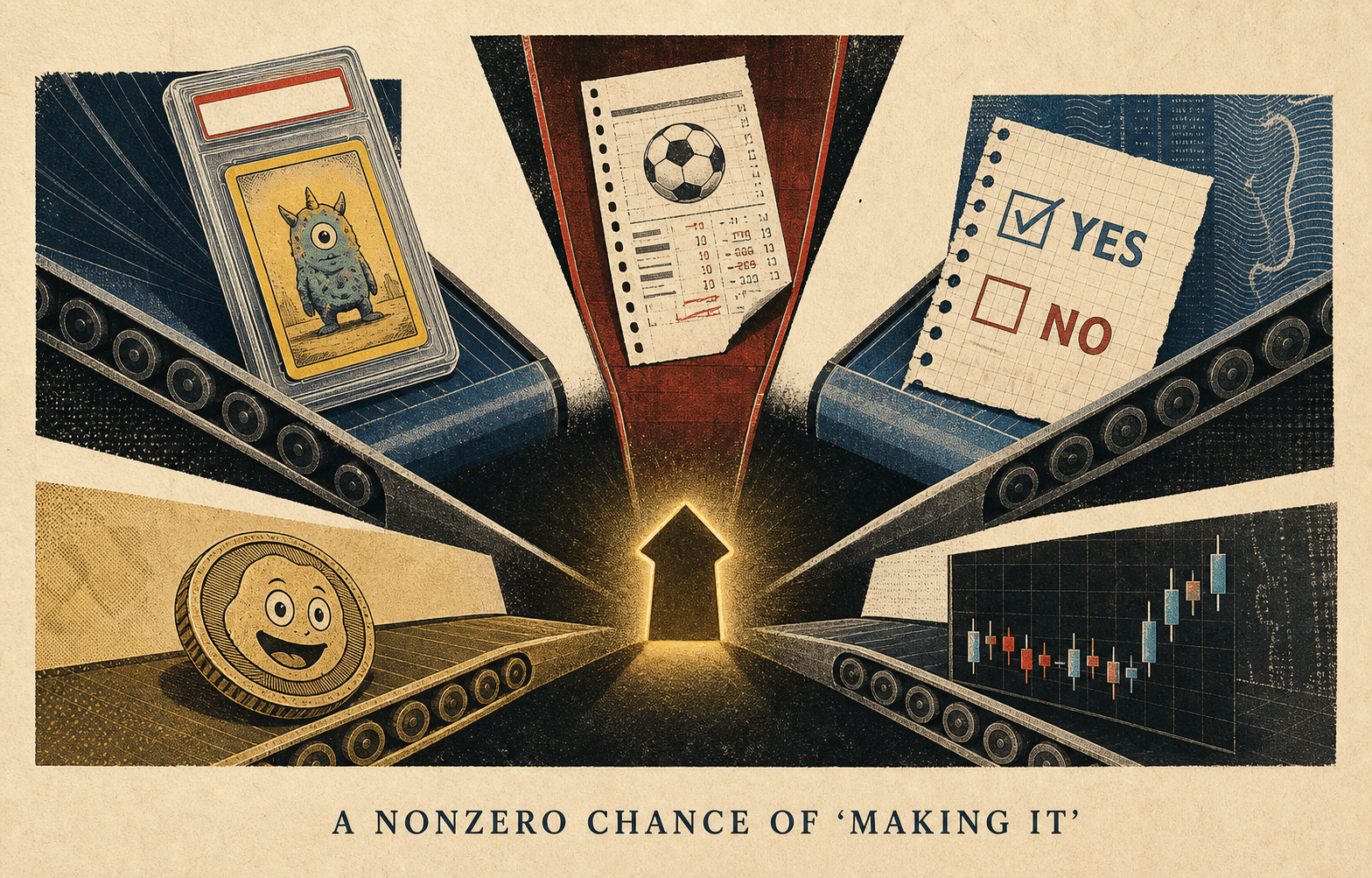
Zoom out and the same silhouette appears everywhere you look. Americans legally wagered $167 billion on sports in 2025, up from a single legal state in 2018. Prediction markets were sold to the world as a truth machine for elections and geopolitics, yet around 90% of Kalshi's volume last year was sports ‘betting’. At the memecoin casino's peak, Pumpfun was minting 70,000 new tokens a day, and 93% of them were dead within a month. Retail traders now put more money into same-day option expiries than any other contract on the S&P.
These look like five different markets, in reality they are tied together.
Someone recently told me that this is how Rome ended, that the empire fell when its people turned to gambling: as the decadence rose, the empire fell.
So I went looking for the evidence, and what I found was that this story is backwards, and that the truth is even more uncomfortable.
Why is everyone suddenly gambling?
Two words, Financial nihilism.
Financial Nihilism describes the reckless speculation of people who believe the system is rigged against them, that the traditional ladder of career and compounding no longer lets them achieve their goals (typically owning their own home). Thus, a lottery-shaped bet has therefore stopped being stupidity and become strategy.
The important word in that definition is believe, because the belief is measurable. When Northwestern Mutual surveyed Americans, around a third of Gen Z said they were putting money into sports betting and prediction markets, and of those using these high-risk vehicles, 80% gave the same reason: they feel financially behind, and this looks like the faster path. Bloomberg ran the finding under the headline "Gen Z's Financial Nihilism Finds Outlet in Prediction Bets, Crypto".
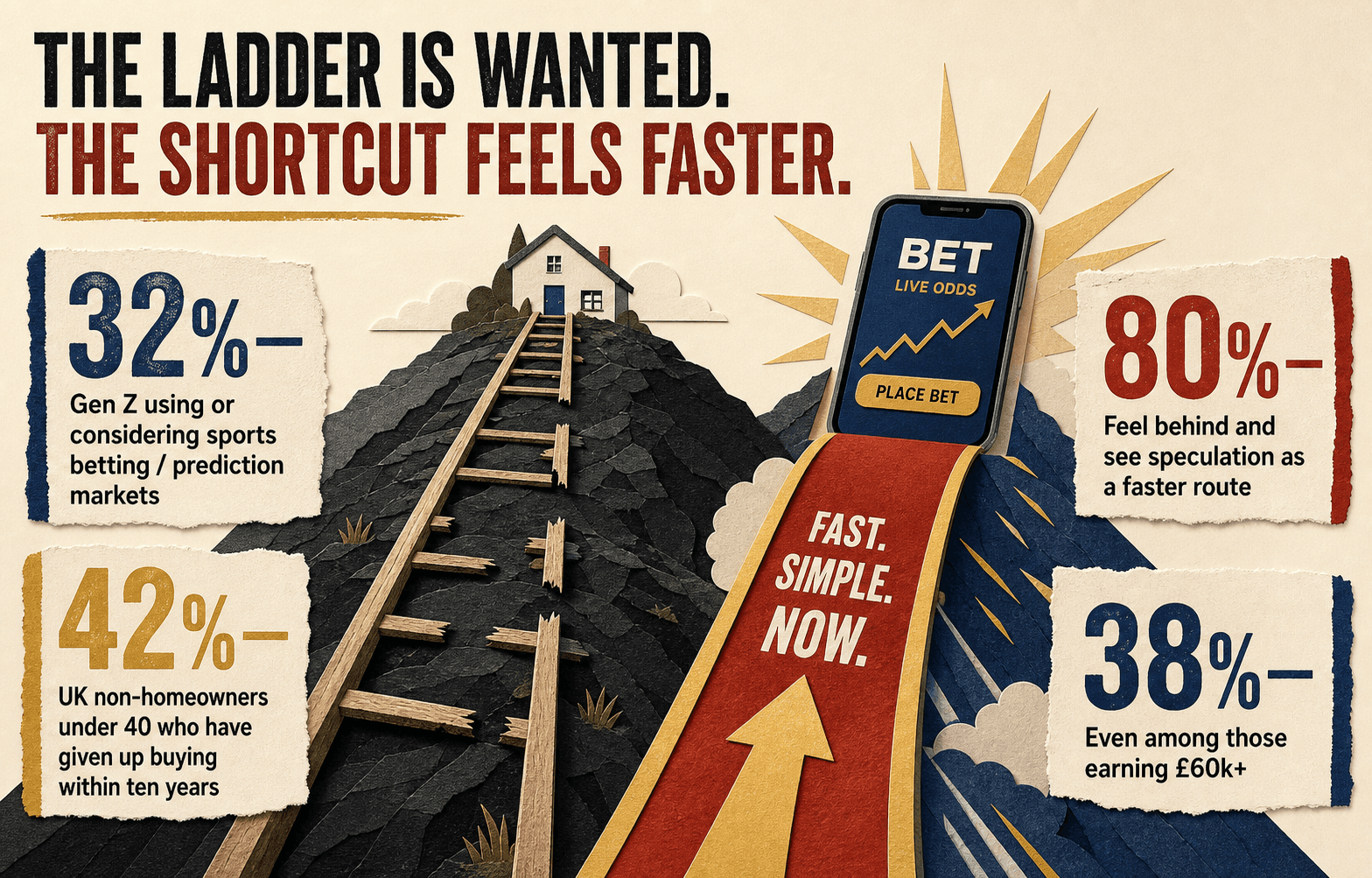
The belief also has a cause you can price. In Britain, 42% of non-homeowners under 40 have given up on buying within the next decade, and the figure barely improves for high earners, since 38% of those on more than £60,000 a year have given up too. When the people the system is supposedly working for conclude that the central asset of middle-class life is out of reach, the rational response changes.
Saving £500 a month against a deposit that inflates faster than the savings is a losing trade, and everyone under 40 has done that math, whereas a parlay, a memecoin or a graded Pikachu offers the one thing the ladder no longer does, which is a nonzero chance of ‘making it’.
There is even experimental evidence for the mechanism. In a study at Carnegie Mellon, researchers made participants feel poor, not be poor but merely feel it, by manipulating whose incomes they were compared against, and the participants who felt poor bought significantly more lottery tickets. The lottery was the original indicator of financial nihilism, and it has always been bought by the people with the fewest alternatives: the poorest American households spend around $412 a year on tickets, four times what the richest spend.
So the gambling wave is not a mystery of character. Hope is an input to financial decisions, like a rate or a spread, and it has been repriced.
What I wanted to know is what happens to societies when that repricing spreads, and that is where the Rome story comes in.
History doesn't repeat, but it rhymes
The version I was told goes like this. Late in the empire, Romans stopped building and started betting, the mob cared more about chariot odds than the infrastructure, and the whole thing rotted from the inside. There is a real source behind it, the fourth-century historian Ammianus Marcellinus, who describes a plebs that hung around the racecourse "from sunrise to evening", quarrelled over dice, and treated a losing charioteer as a graver event than a lost battle.
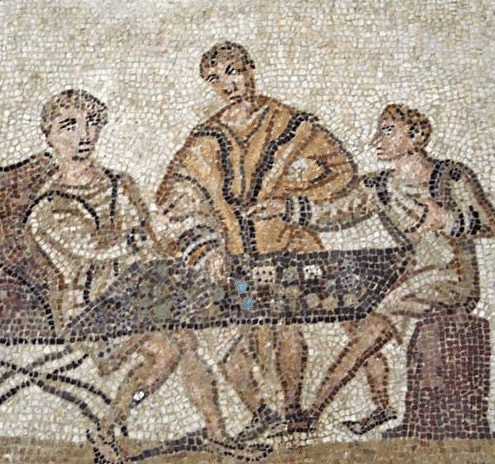
The problem is the dates. Rome's first anti-gambling law was passed around 204 BCE, six centuries before the western empire fell, and the vice ran straight through the golden age. Augustus grumbled about his dice losses in letters. Claudius wrote a book on the game. Nero bet 400,000 sesterces on a single throw, and the taverns of Pompeii, buried in 79 CE at the empire's height, are decorated with gambling scenes.
Modern historians have catalogued more than two hundred proposed causes for the fall of Rome, and gambling makes nobody's shortlist; the whole story rests on one moralising author writing in a tradition that had blamed decline on vice since before there was any decline to explain.
The revealing part is who revived the story. It was Victorian anti-gambling campaigners who dusted off Rome as a cautionary tale, in the exact decades when Britain's own industrial supremacy was slipping to Germany and America. A fading empire moralising about dice while pointing at a dead one is not evidence for the myth, but it is a beautiful demonstration of the pattern the myth conceals.
Because Ammianus was not describing a disease. He was reading a thermometer.
A populace that lives on a grain dole, owns nothing, and has no route by which effort becomes wealth will rationally transfer its hopes to the one arena where fortunes visibly change hands, and in fourth-century Rome that arena had chariots in it. The gambling did not cause the empire's condition; it announced it.
Look at other empires, and the reading is the same.
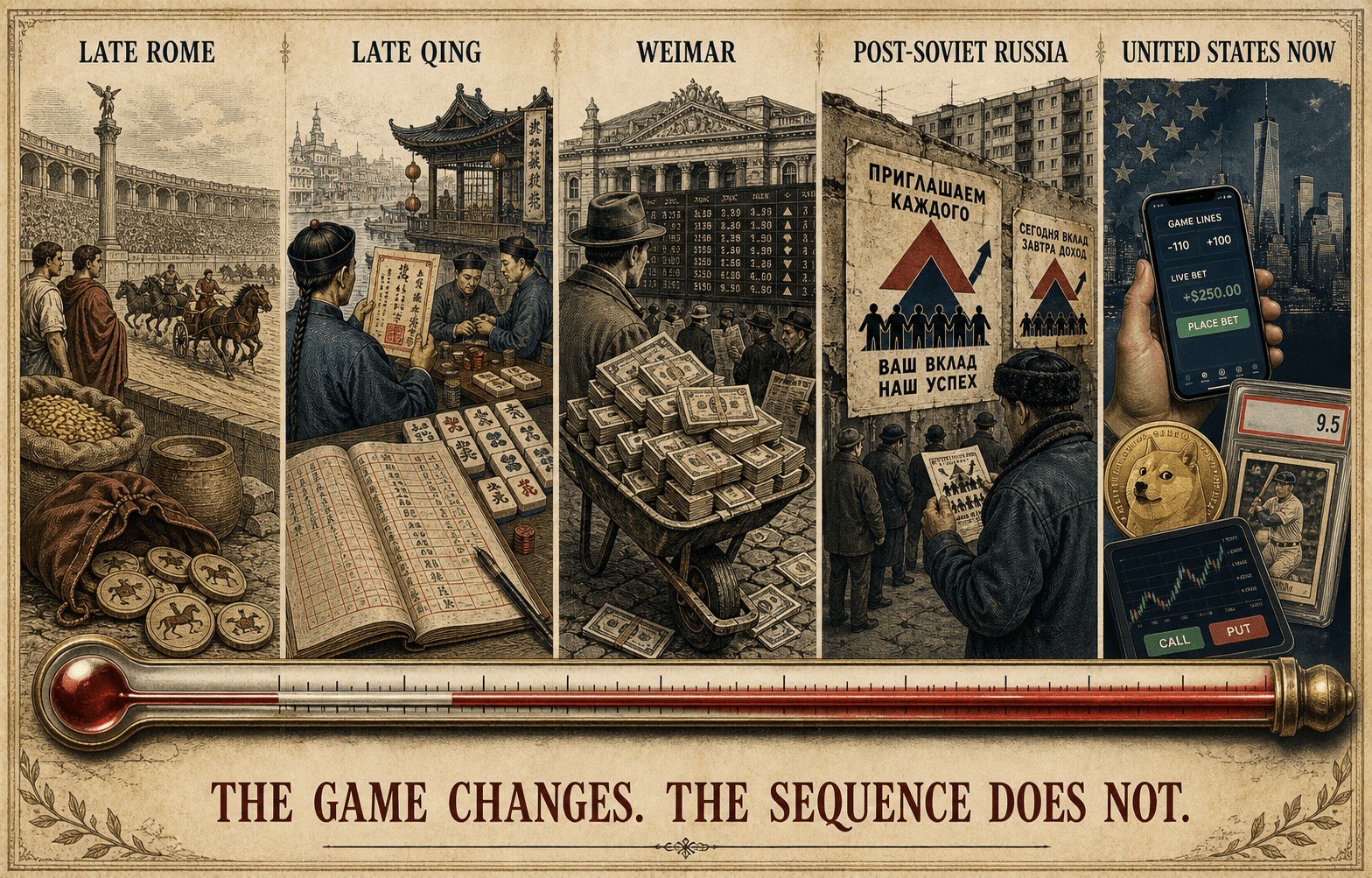
In late Qing China, the state was so broken by war indemnities after the Opium Wars that it legalised gambling and sold casino licences to raise the reparations money, so the institution charged with restraining the vice became its franchisor, and mahjong spread through the treaty ports in the decades before the dynasty collapsed.
In Weimar Germany, hyperinflation punished every saver and paid every speculator, and an entire middle class watched a lifetime of prudence evaporate in months while the bourse became a national obsession. The gambling followed the collapse of money, not the other way round.
In post-Soviet Russia, the MMM pyramid scheme took in some five million people within three years of the flag coming down, and the pattern never left: Russian pyramid participation still resurges every time real incomes fall, which makes it about the cleanest natural experiment on the list.
The historian Fernand Braudel observed that when a great trading power reaches maturity, its capital migrates from commerce into finance, and he called the arrival of that stage "a sign of autumn". Holland lived it first: by 1780 the Dutch, their trading dominance gone, had lent over 350 million guilders abroad, roughly two thirds of it to the British government, the successor that buried them.
Britain repeated the pattern a century on, the City of London hitting its peak as the world's capital exporter in the exact Edwardian decades its factories were losing to Germany and America, a belle époque that ended in 1914.
Different empires, different games, one rhyme. Speculation does not show up as the cause of death on any of these certificates. It shows up earlier, as the moment a society's people, or its capital, stop backing effort and start backing chance.
What is the thermometer saying now?
Which brings us to the present empire, and a reading that is hard to take twice.
America's economy has been migrating from production to finance for four decades, with the financial sector's share of corporate profits rising from roughly 13% in the postwar era to peaks near 40% before 2008. Ray Dalio, who has spent years mapping the rise and fall of reserve-currency powers, puts the United States late in that cycle, and whatever you make of his beliefs, the Braudel reading requires no forecast at all: the capital migration already happened.
What is new is that the migration has reached the household. Financial nihilism is Braudel's autumn arriving at street level, the same rotation out of effort and into chance, executed not by Amsterdam's merchant princes but by a 24-year-old with a betting app and a grading submission.
There are two genuine rebuttals that are worth exploring.
The first is that the timing tracks supply, not despair. America's betting explosion followed the Supreme Court's 2018 repeal of the federal sports betting ban and the arrival of frictionless apps, whereas Britain, which liberalised gambling in 2005, is growing at only around 2% a year. That is true, and it explains where and when the wave breaks, but not who is in it or why, and the who and why are the 80% who say they feel financially behind. Legalisation opened the tap; hopelessness is what is flowing through it.
The second objection is that manias can be constructive. The economist Carlota Perez has shown that great speculative frenzies, railways in the 1840s, fibre in the 1990s, overpaid for the infrastructure that powered the following golden age, so a bubble can be the down payment on the next growth stage rather than the death rattle of the old one.
I find this the strongest counter, and also the most damning comparison, because you have to ask what this mania is building. The railway bubble left railways. The dot-com bubble left the fibre under the Atlantic. A parlay leaves nothing, a memecoin leaves nothing, and 58,000 graded copies of a free Pikachu leave a warehouse of plastic slabs.
This may seem counter intuitive as I have argued that prediction markets are maturing into hedging infrastructure the way options did, a case I stand by. But the defence of speculators is that they carry risk somebody else needs to shed, and that test is the line between finance and nihilism: a speculator opposite a hedger is infrastructure, while a speculator opposite another speculator, wagering on a memecoin, is two people splitting hope that they can afford a home. An economy can survive any amount of the first. The share of the second is the temperature.
The reading
One more number, and it is the one I keep returning to. Of British renters, only 8% say they have no aspiration to own a home, down from 15% five years ago. Desire for the ladder is strengthening even as belief in reaching it dies, and these are the figures that separates nihilism from apathy: people still want the conventional life of work and ownership, but what they have abandoned is the belief that it is available at their price.
That is why every moral campaign against gambling, from the Roman dice laws to the Victorian societies to whatever regulation arrives next, has failed and will fail, because each one shouts at the thermometer while leaving the fever alone. Rome never enforced its gambling laws in six hundred years of trying. Justinian was still passing them in 529 CE.
No empire has yet moralised its people out of the casino. The only thing that has ever emptied one is a world outside it where ordinary effort pays, and the open question for this empire is whether it can still build that world, or whether it will keep grading Pikachus all the way down.
Stop counting the gamblers. Ask what they stopped believing in.